Neptune's Stone Fields
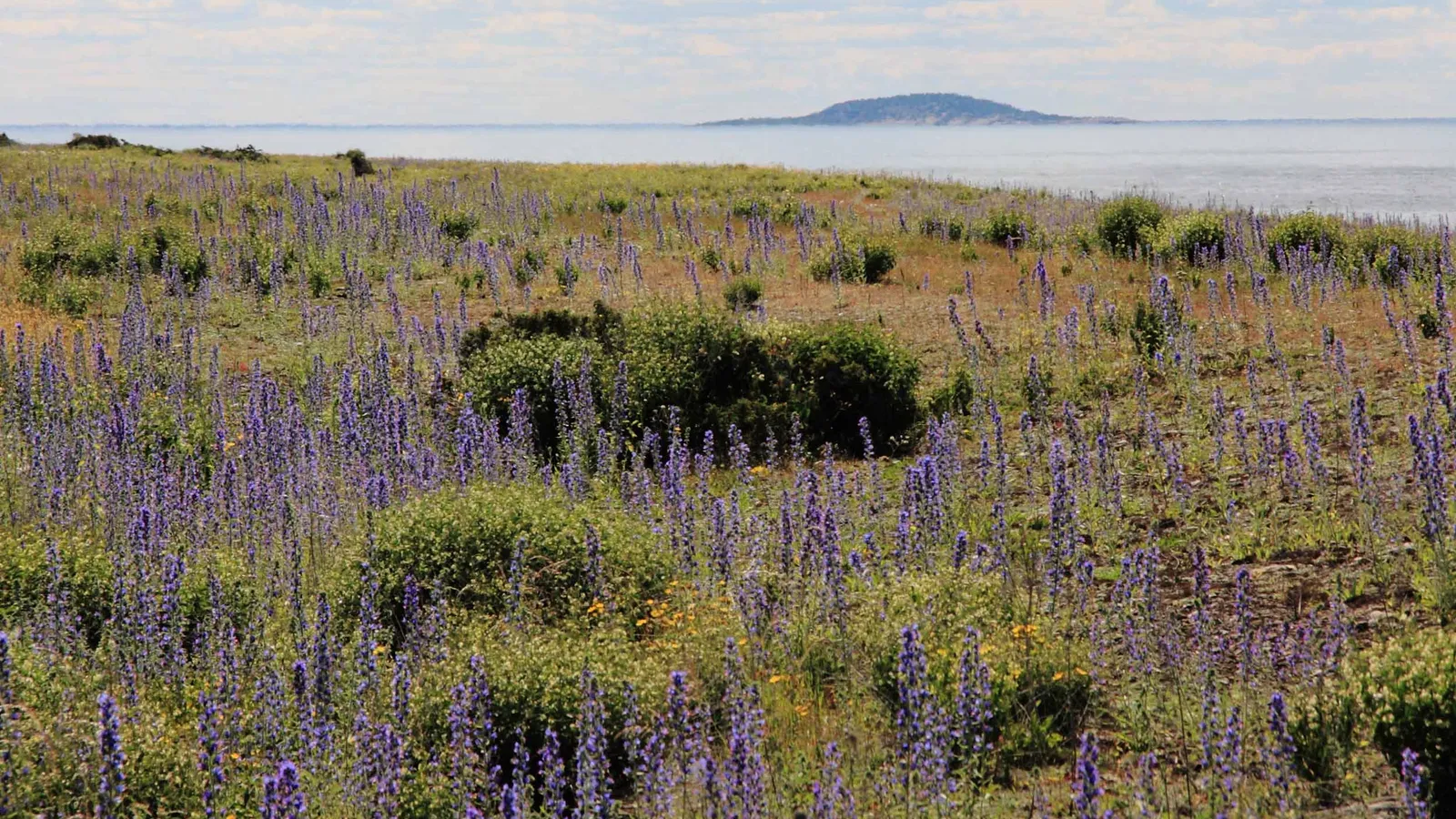
Neptuni åkrar (Neptune’s Fields) is a vast shingle beach on the northwest coast of Öland, about 3 km north of Byxelkrok. Carl Linnaeus named it in 1741, inspired by the landscape looking as if shaped by the sea god Neptune himself — and the name still fits perfectly.
The beach is roughly 200 metres wide, covered with wave-rounded limestone cobblestones deposited by glaciers during the last ice age and smoothed by centuries of wave action. What makes it truly special is that many of these stones contain fossils — trilobites and brachiopods from the Ordovician period, around 450-485 million years ago. Walking across the beach is like walking through a natural geological museum.
In summer, the barren shore transforms when viper’s bugloss (blåeld) covers the area in brilliant blue flowers — accidentally introduced in 1934 with a boatload of gravel from the island of Ven.
Viking Graves
At the southern edge of the reserve lies Forgalla Skepp, a Viking-era burial ground with stone circles, cairns, and a Bronze Age ship-shaped burial mound. The raised stone Höga flisa stands nearby. The graves are visible right next to the parking area.
Practical Details
- Distance from the house: ~65 km north, about 55-60 minutes by car
- Address: 92 Neptunivägen, Byxelkrok
- Entry: Free (nature reserve)
- Access: Easy to reach, close to the road
Good to Know
- Do not take stones home — this is a protected nature reserve.
- Sturdy shoes recommended for walking on the uneven cobblestone terrain.
- Plan for 30-60 minutes to explore the beach and burial ground.
- The common ringed plover is the area’s characteristic bird — keep an eye out.
Just a few kilometres from Trollskogen and the harbour village of Byxelkrok — combine all three for a great northern Öland day trip.
More info: visitoland.com